Click

Sunday, March 2, 2014

Seasonic S12G 650W Power Supply Review

Introduction

It has been 16 months since our last power supply review, but the long wait is finally over. We have a new PSU and cases editor, and this is the first of many new PSU reviews to come. The first PSU to hit our new testing lab is the S12G 650W from Seasonic. Seasonic is a company that hardly requires any introduction; they are one of the oldest and most reputable computer PSU designers, manufacturers and retailers. Today, their products are held in very high regard by experts and enthusiasts. The company has their own retail range but they also serve as an ODM for many other well-known brands.
The target groups of the S12G series are advanced users, enthusiasts, and generally those who are not afraid to pay a bit more for advanced performance. It has impressive specifications and features, including an 80 Plus Gold efficiency certification and a "Smart and Silent Fan Control", as well as a five-year manufacturer's warranty. Despite that, it does not really break the bank, as the 650W version that we will be testing today retails for $89.99 plus shipping, a price that appears quite reasonable for such a product.
A year or two ago, you would have had a hard time trying to find a high quality 80 Plus Gold certified unit for that kind of price; however, today Seasonic's retail range has tight competition from several other manufacturers, such as Antec, EVGA, Rosewill, and others. As the Seasonic S12G is not a modular unit and doesn't really include any special features, the company clearly relies on quality and performance above all else; middling quality and average performance cannot be tolerated when several other manufacturers are breathing down your neck. Let us see if the 650W version of the S12G can live up to Seasonic's reputation.

Packaging and Bundle

Seasonic supplies the S12G PSU inside a fairly well designed cardboard box, with a black/blue color theme. The front of the box is tidy, with just a few badges with the certifications of the unit on display. The sides and rear of the box however are littered with information about the unit, in several languages.
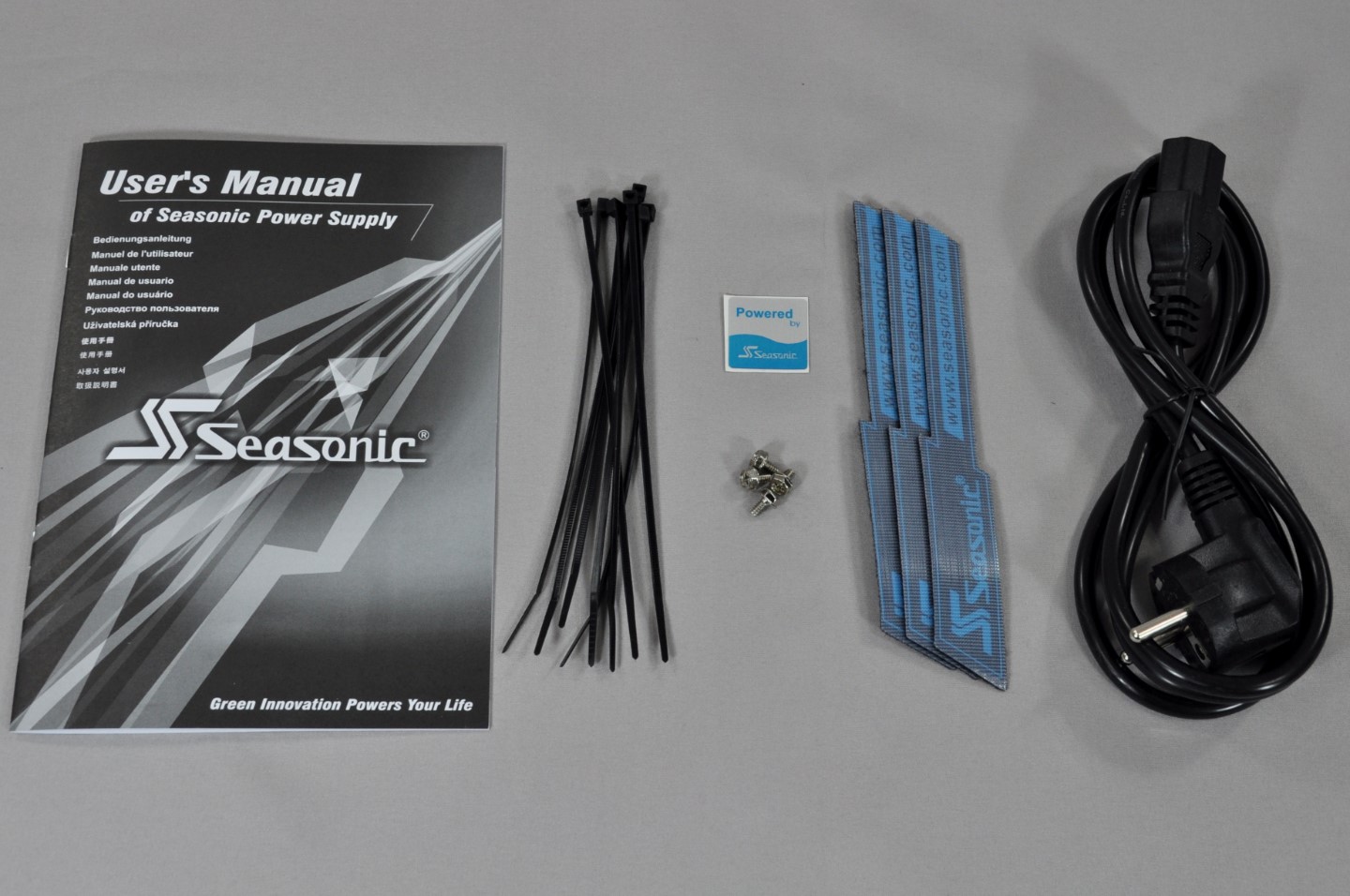
Companies rarely supply anything noteworthy alongside their PSUs, especially the non-modular models, but the Seasonic S12G appears to be an exception. Besides the usual power cord, manual, and screws, Seasonic also includes a few cable ties, three blue/black velco cable straps, and a case badge with the company's logo.

Saturday, March 1, 2014

Low Level Graphics API Developments @ GDC 2014?

With the annual Game Developer Conference taking place next month in San Francisco, the session catalogs for the conference are finally being published and it looks like we may be in for some interesting news on the API front. Word comes via the Tech Report and regular contributor SH SOTN that 3 different low level API sessions have popped up in the session catalog thus far. These sessions are covering both Direct3D and OpenGL, and feature the 4 major contributors for PC graphics APIs: Microsoft, AMD, NVIDIA, and Intel.
The session descriptions only offer a limited amount of information on their respective contents, so we don’t know whether anything here is a hard product announcement or whether it’s being presented for software research & development purposes, but at a minimum it would give us an idea into what both Microsoft and the OpenGL hardware members are looking into as far as API efficiency is concerned. The subject has become an item of significant interest over the past couple of years, first with AMD’s general clamoring for low level APIs, and more recently with the launch of their Mantle API. And with the console space now generally aligned with the PC space (x86 CPUs + D3D11 GPUs), now is apparently as good a time as any to put together a low level API that can reach into the PC space.
With GDC taking place next month we’ll know soon enough just what Microsoft and its hardware partners are planning. In the meantime let’s take a quick look at the 3 sessions.

DirectX: Evolving Microsoft's Graphics Platform

Presented by: Microsoft; Anuj Gosalia, Development Manager, Windows Graphics
For nearly 20 years, DirectX has been the platform used by game developers to create the fastest, most visually impressive games on the planet.
However, you asked us to do more. You asked us to bring you even closer to the metal and to do so on an unparalleled assortment of hardware. You also asked us for better tools so that you can squeeze every last drop of performance out of your PC, tablet, phone and console.
Come learn our plans to deliver.

Direct3D Futures

Presented by: Microsoft; Max McMullen, Development Lead, Windows Graphics
Come learn how future changes to Direct3D will enable next generation games to run faster than ever before!
In this session we will discuss future improvements in Direct3D that will allow developers an unprecedented level of hardware control and reduced CPU rendering overhead across a broad ecosystem of hardware.
If you use cutting-edge 3D graphics in your games, middleware, or engines and want to efficiently build rich and immersive visuals, you don't want to miss this talk.

Approaching Zero Driver Overhead in OpenGL

Presented By: NVIDIA; Cass Everitt, OpenGL Engineer, NVIDIA; Tim Foley, Advanced Rendering Technology Team Lead, Intel; John McDonald,  Senior Software Engineer, NVIDIA; Graham Sellers,  Senior Manager and Software Architect, AMD
Driver overhead has been a frustrating reality for game developers for the entire life of the PC game industry. On desktop systems, driver overhead can decrease frame rate, while on mobile devices driver overhead is more insidious--robbing both battery life and frame rate. In this unprecedented sponsored session, Graham Sellers (AMD), Tim Foley (Intel), Cass Everitt (NVIDIA) and John McDonald (NVIDIA) will present high-level concepts available in today's OpenGL implementations that radically reduce driver overhead--by up to 10x or more. The techniques presented will apply to all major vendors and are suitable for use across multiple platforms. Additionally, they will demonstrate practical demos of the techniques in action in an extensible, open source comparison framework.