 Whether it's cars, aircrafts, houses, motorcycles, or computers people always seem to like hearing about the most exotic products on the planet. HP's latest and greatest desktop computer offering bears the name of one of the most mystical aircrafts of all time, the SR-71 Blackbird. We can't say for sure whether the choice of name actually comes from the famous surveillance aircraft or not, but we would venture to say this is the case. See, besides the name, the two have quite a few other common attributes.
The SR-71 Blackbird was on the cutting edge of technology, pushing the boundaries of what was deemed achievable. It was the first aircraft that was designed to reduce its radar signature, and while it would fail in this respect it helped pave the way for future stealth aircraft. Perhaps more notably, the Blackbird was the fastest aircraft ever produced, officially reaching speeds of Mach 3.2 and unofficially reaching even higher. The actual top speed remains classified to this day. The extremely high speeds required some serious out of box thinking to achieve, so the Blackbird was built from flexible panels that actually fit loosely together at normal temperatures; only after the aircraft heated up from air friction would the panels fit snugly, and in fact the SR-71 would leak fuel while sitting on the runway before takeoff. After landing, the surface of the jet was so hot (above 300°C) that maintenance crews had to leave it alone for several hours to allow it to cool down.
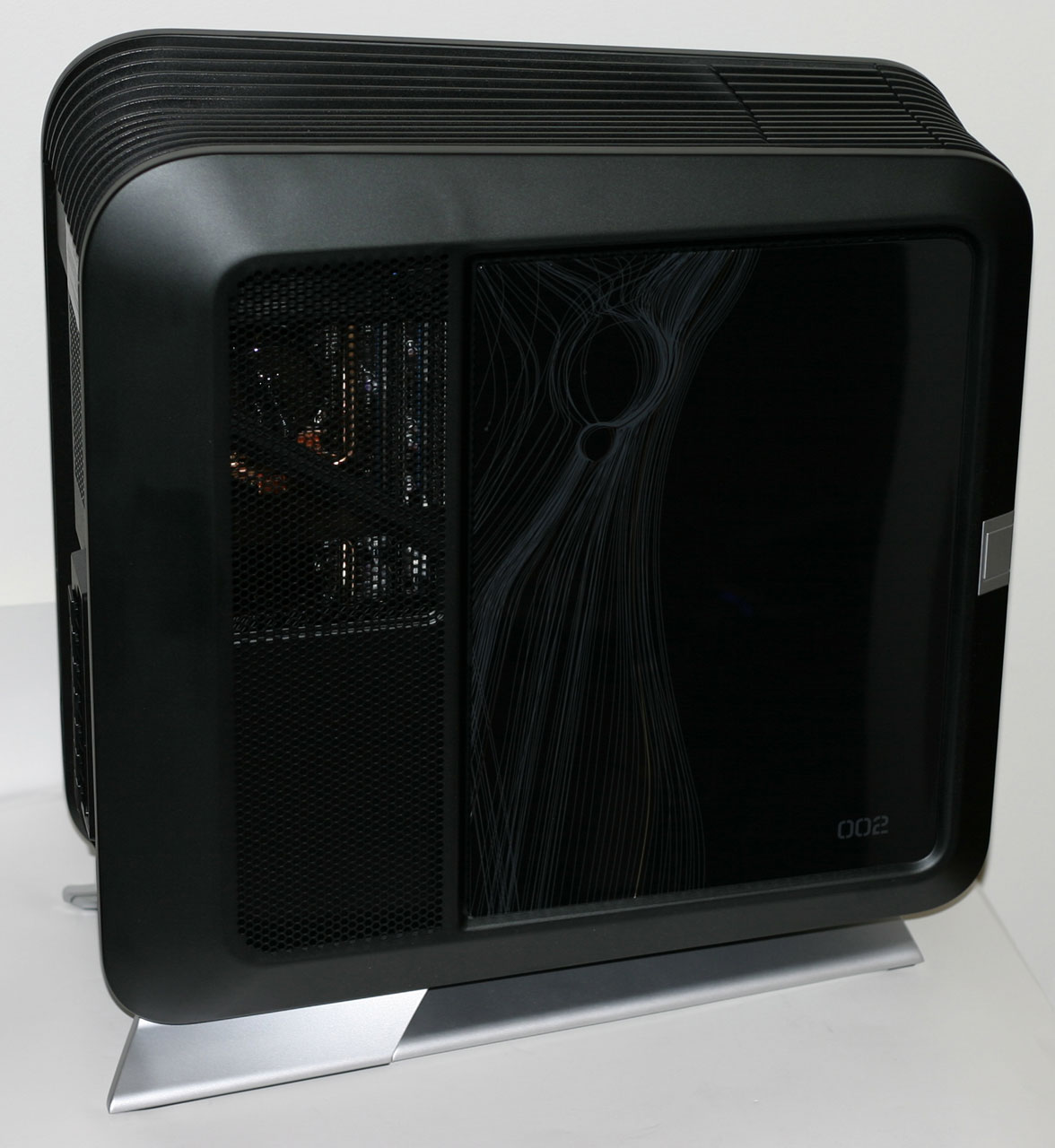 |
So how does all of that relate to the HP Blackbird 002? In terms of components and design, the Blackbird is definitely on the cutting edge of design and technology, and it features several new "firsts" in computers. When we consider that the Blackbird comes from a large OEM that doesn't have a reputation for producing such designs, it makes some of these firsts even more remarkable. Talking about the temperatures that the SR-71 reached during flight was intentional, because the Blackbird 002 can put out a lot of heat. No, you won't need to let it cool down for several hours after running it, but the 1100W power supply is definitely put to good use. If electricity is the fuel of the 002, saying that it leaks fuel while sitting idle definitely wouldn't be an overstatement. And last but not least, the Blackbird 002 is fast - extremely fast - easily ranking among the best when it comes to prebuilt desktop computers.
Where did all of this come from? We are after all talking about HP, a company that has been in the computer business for decades, and during all that time they have never released anything quite like this. Flash back to about a year ago, when HP acquired VoodooPC, a boutique computer vendor known for producing extremely high-performance computers with exotic paint jobs and case designs - with an equally exotic price. The HP Blackbird 002 represents the first fruits of this merger, and while it may not be quite as exotic as the old VoodooPC offerings in all respects, it certainly blazes new trails in the world of OEM computers. There's clearly a passion for computer technology behind the design, and even if we might not personally be interested in purchasing such a computer, we can certainly appreciate all the effort that has gone into creating this latest "muscle car" - or pseudo-stealth aircraft, if you prefer.
